
Diazepam: Uses, Strengths, Side Effects, and UK Safety Guidance
Diazepam is a prescription-only benzodiazepine that has been a cornerstone of anxiety and muscle spasm treatment since the 1960s.
Manufactured by reputable pharmaceutical companies including Martin Dow, Square Pharmaceuticals, and Galenika, it remains widely prescribed across the UK due to its proven efficacy and safety profile when used correctly.
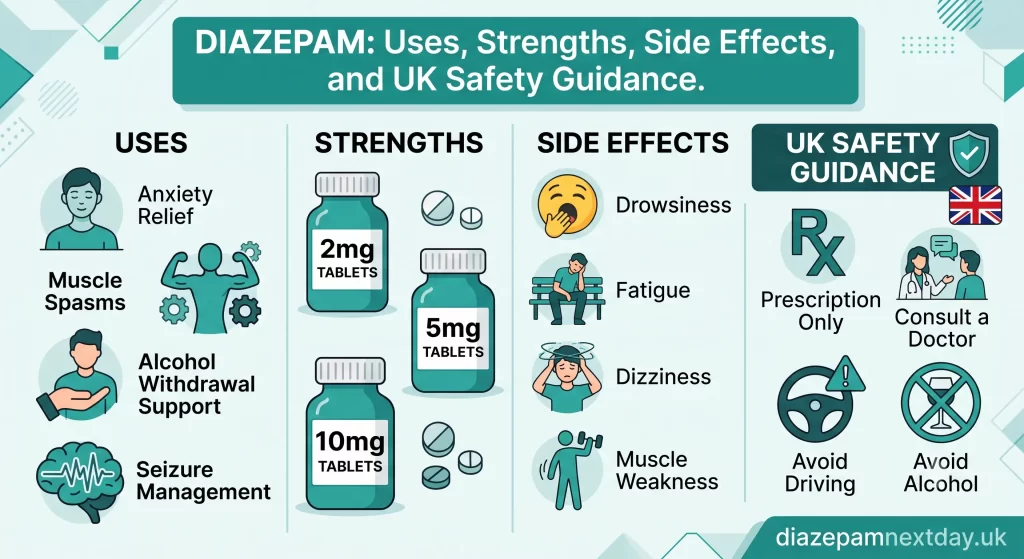
Approved Clinical Uses
- Anxiety Disorders: Management of moderate to severe anxiety states.
- Muscle Spasms: Relief from musculoskeletal conditions and spasticity.
- Seizure Control: Adjunctive therapy for certain types of epilepsy.
- Alcohol Withdrawal: Prevention of delirium tremens and seizures.
- Pre-operative Sedation: Calming patients before surgical procedures.
Available Strengths & Dosing
Diazepam is manufactured in 2mg, 5mg, and 10mg tablets to cater to varying therapeutic needs.
- Adults (18–65): Starting dose of 2.5–5mg, three to four times daily [1].
- Geriatric (>65): Starting dose of 1.25–2.5mg due to increased sensitivity and slower metabolism.
- Paediatric: 0.25–0.5mg/kg/dose every eight hours for children over six months.
Common Side Effects & Precautions
While generally well-tolerated, diazepam can cause drowsiness, fatigue, and impaired coordination.
Patients are advised to avoid driving until they know how the medication affects them and to steer clear of alcohol during treatment.
Long-term use requires a gradual tapering schedule to prevent withdrawal symptoms.