
Insomnia: When Sleep Problems Need More Than Willpower
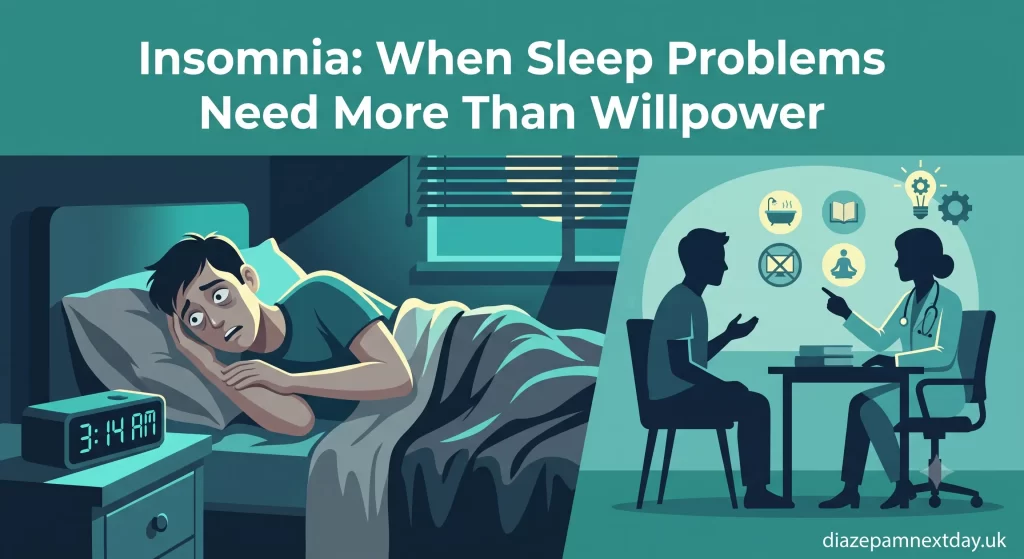
Insomnia is characterised by difficulty falling asleep, staying asleep, or waking too early without being able to return to rest. While occasional sleeplessness is normal, chronic insomnia persists for three months or longer and significantly impacts daytime functioning.
When lifestyle adjustments fail, medications like diazepam can help restore healthy sleep patterns.
How Diazepam Influences Sleep Architecture
Diazepam belongs to the benzodiazepine class, which acts as a central nervous system depressant. It works by enhancing GABAergic neurotransmission, slowing brain activity and inducing sedation.
Unlike some hypnotics that only target sleep onset, diazepam is particularly effective at improving sleep maintenance, reducing the number of nighttime awakenings and extending total rest time .
Key Considerations for Sleep Management
- Half-Life: Diazepam has a long half-life (20–100 hours), meaning its effects persist into the next day. This reduces rebound insomnia but may cause morning drowsiness in sensitive individuals [5].
- Tolerance Build-Up: Tolerance to sedative effects typically develops within two weeks, making intermittent dosing preferable for long-term use [1].
- Alcohol Interaction: Combining diazepam with alcohol before bed can amplify respiratory depression and deep sedation.
When to Seek Help
If insomnia occurs more than three nights per week and affects concentration or mood, a clinical assessment is recommended.
Diazepam should be used as part of a structured sleep hygiene programme rather than a standalone cure.